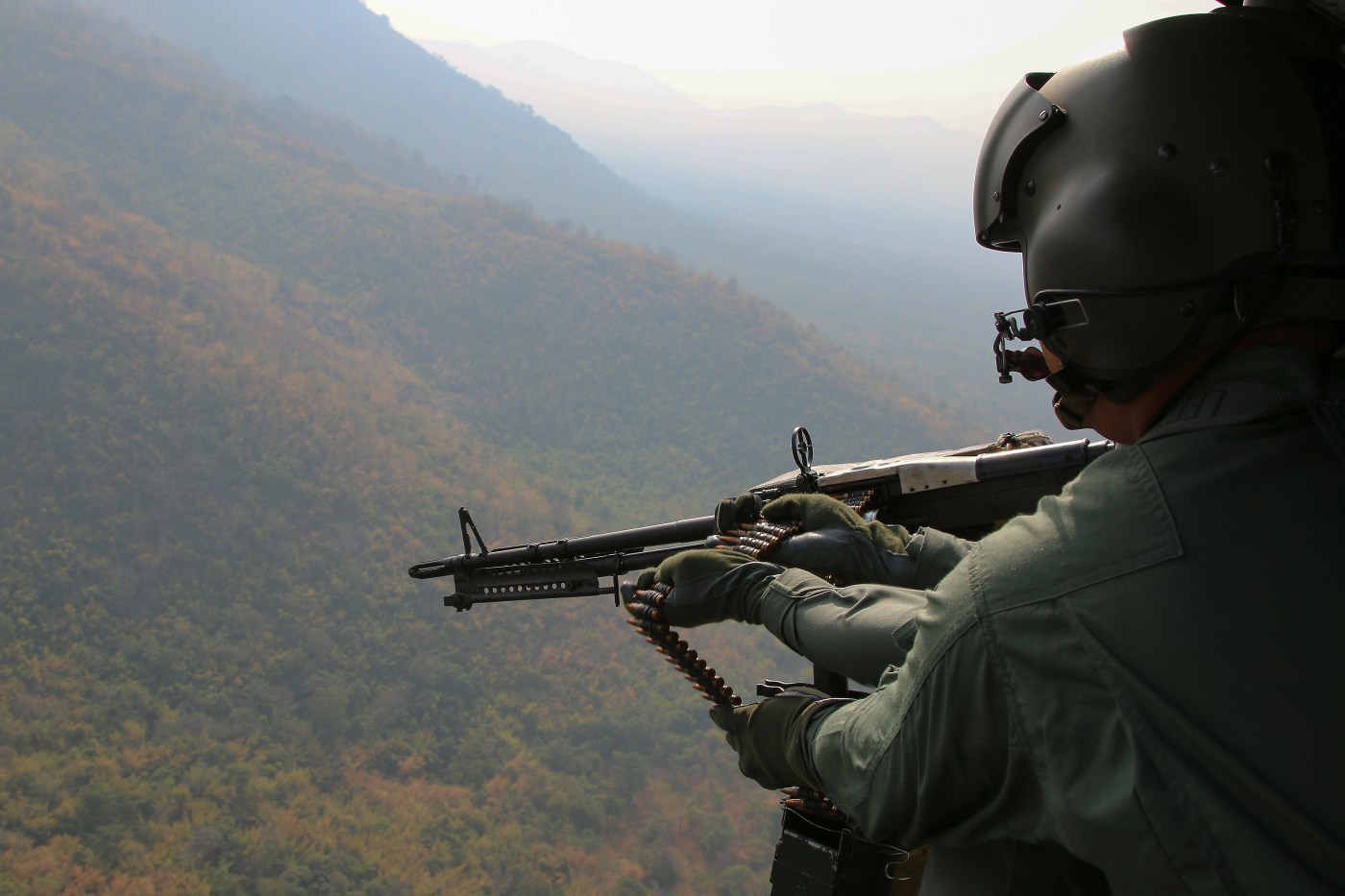
The arming of Mexican drug cartels remains a complex element of the “War on Drugs.” These criminal groups benefit from weak regulations in the United States, but multiple actors contribute to this problem, complicating efforts to implement policies to reduce violence in Mexico.
Drug trafficking groups sometimes obtain weapons from Central America. According to Inside Costa Rica, “Central American corrupt militaries are the ones responsible for arming the Mexican cartels.” This report followed the capture of criminals by Mexican authorities, who possessed light anti-tank weapons and military-grade M433 grenades. The equipment was traced back to the United States, which had armed the Honduran government in the 1990s as part of a foreign policy to support non-communist governments in Central America. Some segments of these institutions are now selling their equipment to Mexican non-state actors. Honduras is not unique, as multiple nations in this region have large stockpiles of weapons.
Some sectors of the Mexican authorities have also been blamed for supporting these criminal groups. Like Central American governments, Mexican authorities exhibit high levels of corruption. According to Nuevo Leon’s state secretary, drug cartels have infiltrated 50 percent of the municipal and state police, creating a perfect environment for corruption and weapons exchanges. Additionally, the Mexican military has high levels of deserters, a problem that President Felipe Calderon tried to address by increasing troop salaries. These issues are relevant to the implementation of the Ley de Seguridad Interior (Internal Security Law), which gives the Mexican military and the president more power to mobilize troops and protect them from human rights violation accusations. This policy could inadvertently contribute to the armament and empowerment of Mexican drug trafficking groups.
Another factor contributing to this problem is the globalization of drug cartels. These groups have made connections with different actors outside the continent. Brian DeLay argues in his article “How Not to Arm a State” that Mexican cartels “can arrange for massive arms transfers from China, Eastern Europe, and other regions.” This condition allows these groups to bypass American authorities and the expensive U.S. weapons market. China is a special case, as criminal groups also purchase chemical ingredients from this nation to make synthetic drugs. La Familia cartel became known for controlling the exportation of chemicals from China, suggesting that they might also be buying weapons from Chinese producers or the Asian market. However, there is insufficient information to measure the flow of weapons and identify exact sources.
Finally, the drug trafficking groups are also arming themselves. Jose Carreno Figueras reported in Excelsior how the Cartel Jalisco Nueva Generacion (CJNG) is making their own weapons in clandestine steel factories. The information originated in a Global Post report by drug trafficking expert Ioan Grillo. The CJNG’s factories used industrial metal to make AR-15s. This transformation on the nature of drug cartels contributed to the CJNG acquiring control over multiple regions of the nation. Moreover, this organization also used its eliminate access to weapons to wage a war against historical crime syndicates such as Los Zetas and the Sinaloa Cartel. The evolution of this organization makes the fighting against its development extremely complex. This condition forces the Mexican authorities to expand their range of operations in this “War on Drugs.”
The armament of drug trafficking groups is a multifaceted issue. The United States has contributed to this problem through its inability to stop the flow of weapons to Mexico. While this topic can take on complex political dimensions in the U.S., the problem extends beyond the northern state. These criminal organizations have reached unprecedented international dimensions, involving nations like China. Finally, the CJNG’s involvement in weapon manufacturing represents a new level of urgency for Mexican authorities. A successful campaign to stop the arming of Mexican cartels must address these elements to avoid negative results.
For this piece of writing, I incorporated a combination of books and articles. Michael Deibert, In the Shadow of Saint Death, 2014. George W. Grayson, La Familia Drug Cartel: Implications for U.S.-Mexican Security, 2010. Brian DeLay, “How not to Arm a State,” Southern California Quarterly, Spring 2013. Jose Carreno Figueras, “El Cartel de Jalisco Nueva Generacion se extiende como cancer en Mexico,” Excelsior, 2015.
 Latin American Chronicles
Leave a comment